Please Others Driver: When Being Disliked Feels Dangerous


In Transactional Analysis (TA), we talk about drivers which are unconscious ‘rules’ we often pick up in childhood about what we need to do to feel accepted, safe, or good enough. This post is part of a series exploring each driver in more detail. If you haven’t read it yet, the intro blog explains what drivers are and how they form.
Please Others Driver: The origins
The Please Others driver is the inner message: Keep people happy. Don’t upset anyone. Earn belonging by being agreeable.
It often forms when, as a child, you learned that harmony (or approval) mattered more than your own needs. You might have picked up that being 'easy', 'helpful', or 'good' kept relationships steady and that disagreement, anger, or having needs created tension, withdrawal, or conflict.
You may have grown up with messages like:
“Don’t be selfish.”
“Be nice.”
“Don’t upset your mum/dad.”
“Just let it go.”
“Good girls/boys don’t argue.”
“You’re such a good girl/boy.”
“You’re so helpful.”
“Everyone likes you, you’re so easy to be around.”
You may have learned to read the room early, noticing moods, smoothing things over, and keeping the peace because conflict felt risky.
Please Others: The Positives and Negatives
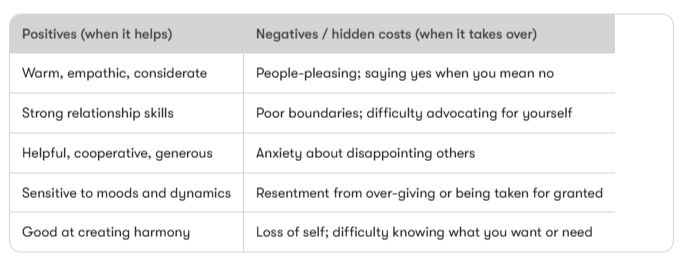
Examples of this driver
You might recognise Please Others if you:
Say yes when you mean no
Feel guilty setting boundaries
Scan for signs you’ve upset someone
Avoid conflict at all costs
Feel responsible for other people’s emotions
How it shows up in work & relationships
At work, it can look like being helpful and accommodating, but also taking on too much, struggling to advocate for yourself, or feeling anxious about feedback.
In relationships, you might over-give, minimise your needs, or fear rejection if you’re honest. Boundaries can feel like you’re being 'mean', even when they’re healthy.
The hidden cost
The cost is often resentment, anxiety, and loss of self. If you’re always adapting to others, it can become hard to know what you actually want, feel, or need.
A kinder message
Your mantras if you have a Please Others driver could be:
“I can please myself too.”
“My needs matter.”
Try this reflection:
Notice one moment you automatically say yes.
Ask: What would I choose if I wasn’t afraid of disappointing someone?
Practise one small boundary this week (a pause, a 'let me think about that', or a gentle no).
If this pattern feels familiar and you would like to explore it further, feel welcome to contact me.
